Musikk
Black Sabbath, Jackass and Wacken – Inside Vreid’s new era
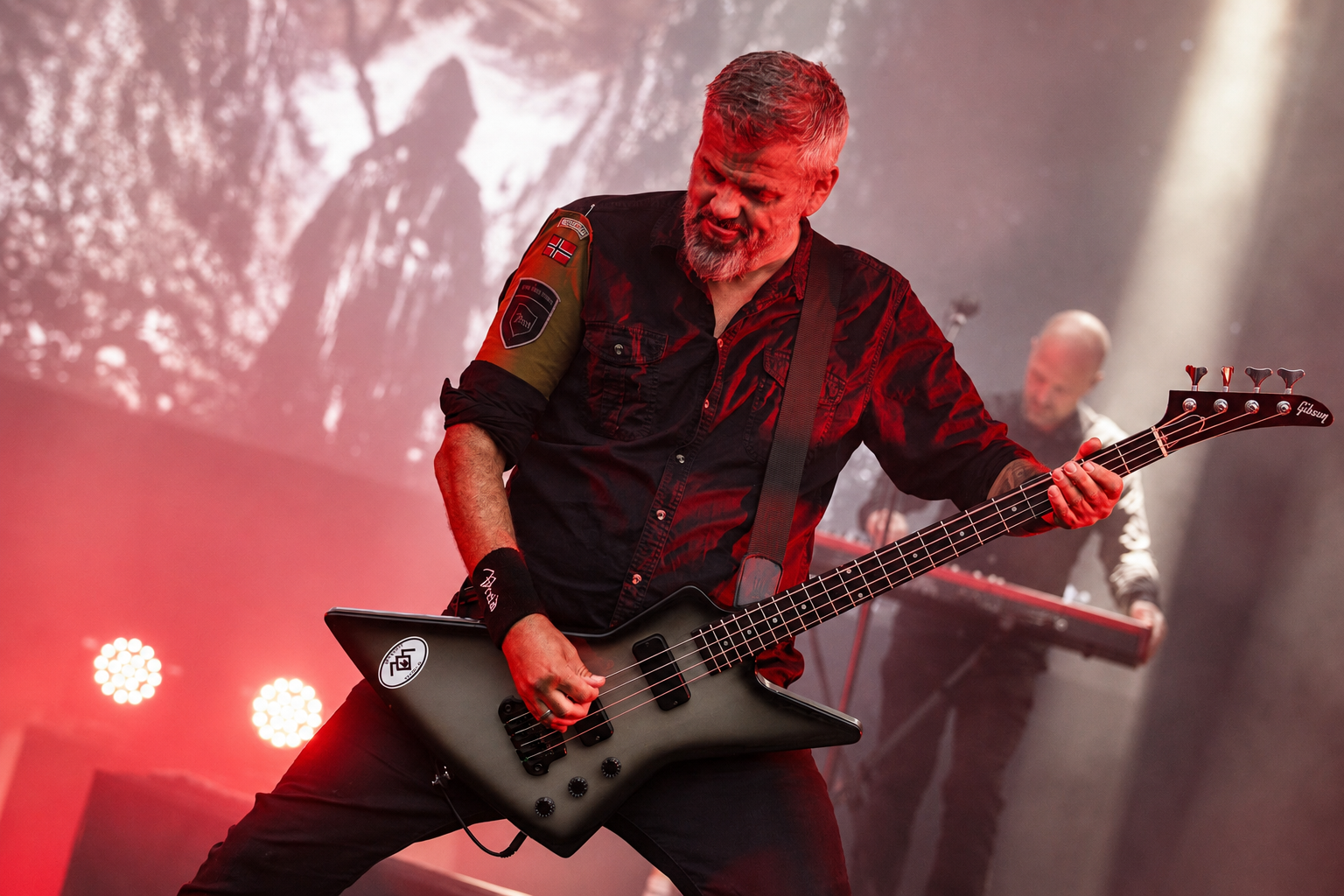
After more than 20 years, Vreid had reached a point where songwriter and bassist Jarle Kvåle felt that something was missing. Work on the band’s new album had begun to feel routine – and for the first time, he had to ask the brutal question: “What are we actually doing?” The answer was a pause, a long and demanding creative process – and ultimately one of the most ambitious albums of Vreid’s career.
Klikk her for å lese den norske versjonen.
In this exclusive Rockman interview, Kvåle talks about finding the way back, the Black Sabbath concert that inspired the title track, the feature film “Kraken,” Agnete Kjølsrud, his unlikely friendship with Jackass star Chris Pontius – and why Vreid are now entering one of the most ambitious periods in their history.
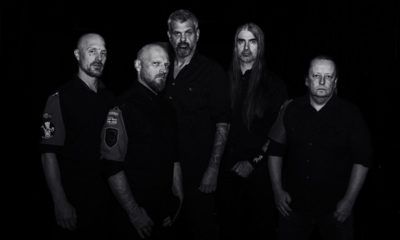
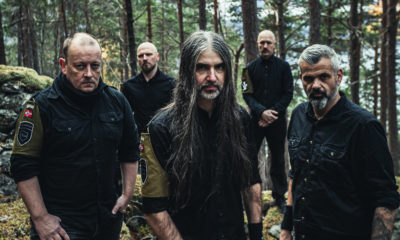
When Rockman spoke with Jarle Kvåle in connection with the release of “The Skies Turn Black” in March, Vreid stood at the threshold of an exciting new chapter. Released on March 6 through Indie Recordings, it was the band’s first studio album in five years. But the story behind the record is not primarily about a planned return after a break. It is about a band that had to rediscover the very reason it exists.
“If there isn’t one hundred per cent energy and full force behind it, I’m not interested.”
– Jarle Kvåle, Vreid
Although Vreid appeared to be in a strong position – with major festival appearances, an established international name and more than two decades of musical history behind them – the creative fire could no longer be taken for granted.
– “For the first time in my career, I felt that something was missing. We had released the previous album during the pandemic without getting a proper chance to play it live, and later we had some fantastic festival experiences. But when we started writing new songs, I gradually realised that it was beginning to feel like routine. That great sense of enthusiasm just wasn’t there,” Kvåle says. It became a decisive moment.
– “It was up to me to stop the clock and say to the others: What are we actually doing here?”
Kvåle pulled the emergency brake
Rather than forcing out a new album simply because one was expected, the band stepped away from the process. Kvåle continued writing on his own, without knowing exactly where the material would lead.
– “I’m wired in such a way that if there isn’t one hundred per cent energy and full force behind it, I’m not interested. It has to be all or nothing.”
What could initially have marked the beginning of the end instead became a necessary reset.
After some time, the members began meeting again. New ideas were brought to the table, vocalist Sture Dingsøyr became more deeply involved in the writing, and the contours of a new Vreid album slowly began to emerge. This time, the energy was entirely different.
– “When we got together again, I immediately felt there was much more drive in what we were doing. Then it was simply a matter of going full steam ahead. But the process took a couple of years longer than I had expected.”
The result was “The Skies Turn Black” – eleven tracks on which Vreid embrace their roots while taking their musical universe in more directions than ever.
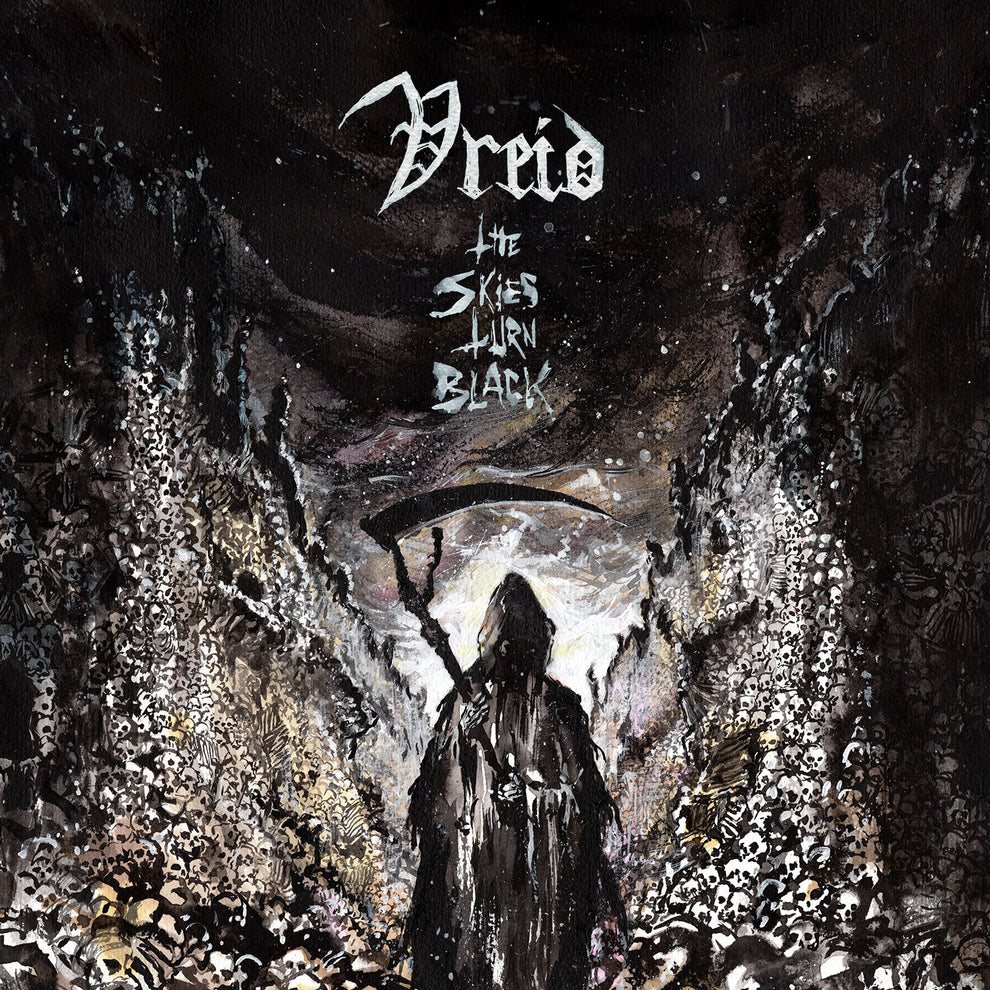
– “I wanted to embrace the things that inspire me. If you go back to the first Vreid album, there was a great deal of variety there as well. We had typical Sognametal, punk-influenced songs and ballads. We have always created a space in which we can move quite freely, but this time we have probably taken that even further.” Kvåle believes that this breadth may mean the album needs time to reveal itself.
– “I think this is a record you can enjoy for a long time. Some of the songs may challenge the listener a little more, and you may have to spend more time with certain tracks. But that is also when you discover new things. The album can grow with every listen.”
The Sabbath night that changed everything
One of the album’s most personal moments is its title track, “The Skies Turn Black.” Kvåle wrote it after attending Black Sabbath’s historic farewell concert in Birmingham – an experience that affected him with a force he had not been prepared for.
His connection with Black Sabbath, however, runs much deeper than ordinary fandom. Through his work with Tons of Rock, Kvåle helped bring Black Sabbath to the festival in Halden in 2016.
It was a booking that would have an enormous impact on the festival’s future. – “There would have been no Tons of Rock story as we know it without that booking and everything that followed. I honestly don’t know whether the festival would even have continued. It was an absolutely crucial milestone.”
He was later also involved when Ozzy Osbourne played his final Norwegian concert in 2018, again at Tons of Rock. Birmingham, however, was something else entirely. – “It was one of the greatest music-cultural days I have ever experienced. The whole day felt like a confirmation of why I have devoted my life to rock and heavy metal.”
The stage featured bands and artists who had helped define several generations of heavy music. For Kvåle, the experience became a concentrated journey through the entire history of heavy metal. – “It almost felt as though fifty years of metal were reverberating through the venue. It was absolutely fantastic.”
The following day, he was on the train to London – on his way to another concert, this time Slayer – when the impressions began finding their way into words and musical ideas. – “I was slightly euphoric. I started thinking about a line of lyrics and some ideas I had written down earlier. Shortly afterwards, I went on holiday to Italy. During dinner, I suddenly felt everything coming back to me. My daughter looked at me as if to say: Put the phone away now.”
The next day, he sat down and wrote.
– “The lyrics came almost without me having to work on them very much. At the same time, I started thinking about a riff, and in many ways the song created itself. It was the final song I wrote for the album, but it ended up summarising the entire record.”
“The Skies Turn Black” thus became both a conclusion and an explanation: a tribute to Ozzy Osbourne, Black Sabbath and the music that had shaped Kvåle’s life – but also a reminder of why he still wanted to create new music.
– “Ozzy, the entire Sabbath universe and Ozzy’s solo career are among my greatest sources of inspiration. The core probably lies there, together with Alice Cooper and 1980s thrash metal – Metallica, Slayer and bands of that kind.”
Listen to Vreid’s “The Skies Turn Black”:
From the Sognefjord to the silver screen
The album’s most cinematic work is undoubtedly “Kraken.” The nearly eight-minute composition was written for the Norwegian feature film of the same name, connecting Vreid’s dark, atmospheric sound with the mythology surrounding the enormous sea monster of the Sognefjord.
Watch the official music video here:
This story also has deep roots in the band’s past. The connection came through the film’s producer, whom Kvåle had known since the earliest days of Windir.
– “Einar, who produced the film, was the first music-school student we came into contact with when we started Windir. He turned up at our very first rehearsal with sheet music for us. We have stayed in touch over the years, and a couple of years ago he told me that he was working on this film about the myth and the Sognefjord.” The question was whether Vreid could write something that would fit the film’s universe. Kvåle needed little persuasion.
– “I thought it was incredibly cool. I’m deeply inspired by film and film music, so writing something that could work within this world while preserving the essence of Vreid and the Sognametal sound was an incredibly exciting challenge.”
“Kraken” had to work both as a self-contained Vreid composition and as music for the film’s conclusion and end credits. This required Kvåle to think differently from the way he would when writing an ordinary metal song. – “When the music is going to last almost eight minutes, you have to find a melodic mood that can carry the whole piece. We built up a great deal, but we also removed a lot. I often try to go back and ask: What was the original idea? What made me begin writing this song?”
He wanted to preserve the fundamental melody and atmosphere without burying them beneath too many layers. – “Sometimes you get lost in something because you have added far too much. Then you have to strip it back and rediscover the original idea.”
“Kraken” became a bridge between three decades of shared history, the dark mythology of the Sognefjord and Vreid’s increasingly cinematic ambitions.
Read also: Vreid deliver Norwegian metal at its finest
Chris Pontius – the coincidence of a lifetime
The album’s most unlikely connection began with a Windir record on Instagram. Chris Pontius, known around the world as “Partyboy” from Jackass, had posted content showing a Windir release. Several people brought the post to Kvåle’s attention, and he decided to send Pontius a message.
– “I simply wrote that it was cool that he was into Windir. He replied immediately, and we ended up messaging back and forth.”
That chance contact quickly developed into a friendship. Kvåle invited Pontius to Norway, where they discovered a shared interest in music, film and art that was far broader than many might associate with the Jackass personality.
– “We had a fantastic connection straight away. He has joined us in Norway, and we have worked on several different projects. He is incredibly passionate about music. He loves Norwegian black metal, but also old punk and goth. He is very interested in creating new things and in art in general.”
The summer before the album’s release, they sat together in Kvåle’s home studio. He played Pontius some of the new songs, and the idea of a collaboration slowly began to take shape.
– “I said rather casually: If we make a music video for this one, I have an idea that perhaps you could be in it. But I honestly thought it was unlikely to happen.”
When the song was finished, he sent it to Pontius.
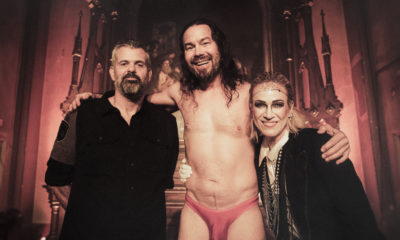
– “He loved the song. I told him we would be shooting the video in January if he wanted to take part. Then the flight was booked – and suddenly he was standing here.” Pontius took the leading role in the dark, ritualistic video for “Loving the Dead,” in which Vreid join forces with Djerv and Agnete Kjølsrud. The video also revealed a very different side of the American from the familiar Partyboy persona.
Watch Vreid and Djerv with Chris Pontius:
– “Chris contributed a great deal of creative input and influenced how the video developed. He may be known as Partyboy, but he has many other dimensions».
«It is always exciting when people are able to show sides of themselves that audiences do not necessarily associate with them.”
Read also: Vreid and Djerv release dark, ritualistic music video featuring Jackass icon Chris Pontius
Agnete Kjølsrud – Complete artistic freedom
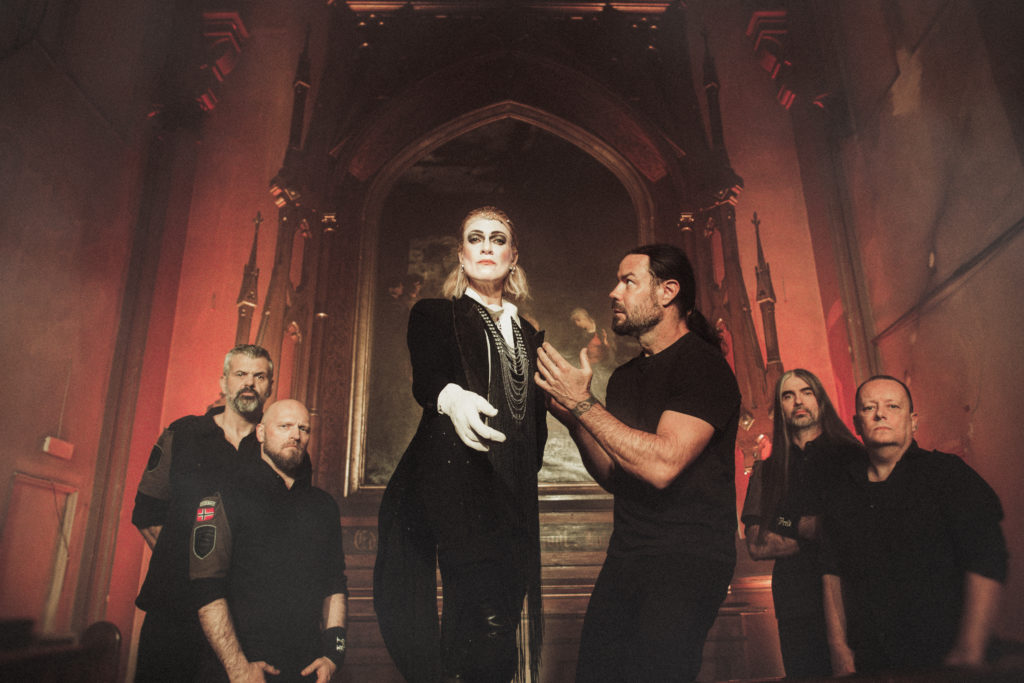
When Kvåle was working on “Loving the Dead,” he knew early on that the song needed a voice capable of disrupting expectations. Agnete Kjølsrud of Djerv was the first person who came to mind. – “She has a very distinctive and unique voice. We had toured together before, so I sent her the song and asked whether she might be interested in trying something.”
Kjølsrud immediately embraced the idea.
Rather than giving her completed vocal lines, Kvåle opened up the entire creative space and allowed her to interpret the material in her own way.
– “I said: Here are the lyrics. You won’t get any vocal lines from me. Interpret them exactly as you want, and think completely freely and creatively.”
She rewrote parts of the lyrics, developed melodies and sent her ideas back. Kvåle’s reaction was immediate.
– “It was simply perfect. She developed the song in so many ways through her vocals and the way she shaped it.” It is the dynamics of Kjølsrud’s performance that particularly impress him.
– “She begins quite lightly and almost cautiously before moving into the full-blooded Agnete version we know – completely extreme towards the end. She has that rawness in her voice, but she is also incredibly accomplished at singing in many different settings.”
The collaboration would later find its natural continuation on stage, when both Kjølsrud and Pontius joined Vreid on the Harder Stage at Wacken.
In front of tens of thousands of metal fans, a chain of almost unbelievable coincidences came full circle: an old Windir post on Instagram had grown into a friendship, a music video and a unique encounter on one of the world’s greatest metal stages.
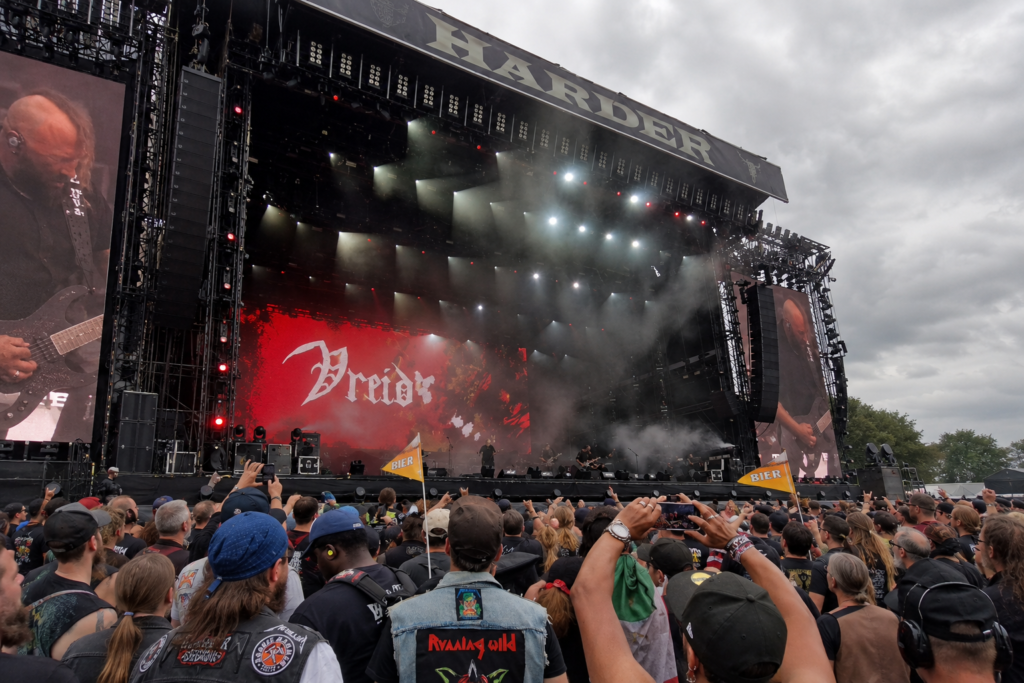
Read also: Vreid take over Wacken’s Harder Stage with Agnete Kjølsrud and Chris Pontius
An album shaped by artistic encounters
Although Kvåle wrote around 90 per cent of the music and much of the lyrical material, he makes it clear that “The Skies Turn Black” could never have been created alone. Producer Anders Nordengen played a central role in the search for a vast, organic sound.
– “I wanted the album to sound big, organic and clear. The drums were recorded in a proper old-school drum room, and we spent a great deal of time achieving a heavy, clear and authentic drum sound.”
He also wanted to bring the guitars further forward and give the instruments more room to breathe.
– “I didn’t necessarily want it to sound like classic heavy metal or pure black metal. There is always a black-metal quality to our music, but this time the guitars were meant to be even more prominent and heavier. The bass is almost straight into the mixing desk, with very few effects. The aim was a more open and expansive sound.”
The visual identity was created by Norwegian artist Kim Holm, known for his intense and often explosive live concert drawings.
– “He is a madman. The first time he drew us live, he produced perhaps ten or fifteen drawings while we were on stage. He works at an absolutely insane pace and is completely unique.”
Kvåle sent Holm demos, thoughts about the album – and what he himself describes as a drawing on the level of something a child might have made in kindergarten. – “Then he set aside a few days, went completely into his own bubble and began sending material back and forth. I don’t know how he does it, but he captured the essence of what I was trying to express in an incredible way.”
For Kvåle, cover artwork, music videos and visual art are not decoration surrounding the music.
They are all parts of the same work.
– “Whether it concerns the lyrics, the design or the music videos, everything has to connect. In my view, it is just as important as the music».
«When other artists interpret your ideas and add a dimension you could never have expressed on your own, it is enormously rewarding.”
He identifies Holm, Nordengen, Kjølsrud and Pontius – alongside the members of Vreid – as crucial to the final result.
– “We have worked together in the band for so long that we have almost developed our own tribal language. We understand what the others want. But when you invite people with entirely different expertise into the process, the project can be elevated into something far greater than you originally imagined.”
From Europe to the burial mounds of Borre
When the interview took place in March, Vreid had just embarked on their longest European tour in many years, alongside Hypocrisy, Abbath and Vomitory.
For Kvåle, the touring package was almost a collection of bands that had helped shape him as a musician.
– “Hypocrisy were enormously important to me when I began playing music, particularly from around 1994 to 1998. The same applies to Abbath and the entire Immortal universe».
«Although this is heavy, aggressive music, all of the bands have a great deal of melody. That is why I think the package works so well together.”
The tour marked the beginning of an intense year of live performances. It was followed by appearances at Sweden Rock, the Harder Stage at Wacken and Midgardsblot, where – just two weeks after Wacken –
Vreid unleashed the darkness among the burial mounds of Borre. Several of the new songs came alive in surroundings that seemed almost purpose-built for them. “A Second Death” opened the concert, before “The Skies Turn Black,” “From These Woods” and older Vreid classics bound past and present together.
In Rockman’s live review, Vreid were described as a band on home ground – not because they were attempting to recreate a distant past, but because their music still carries something raw, cold and timeless.
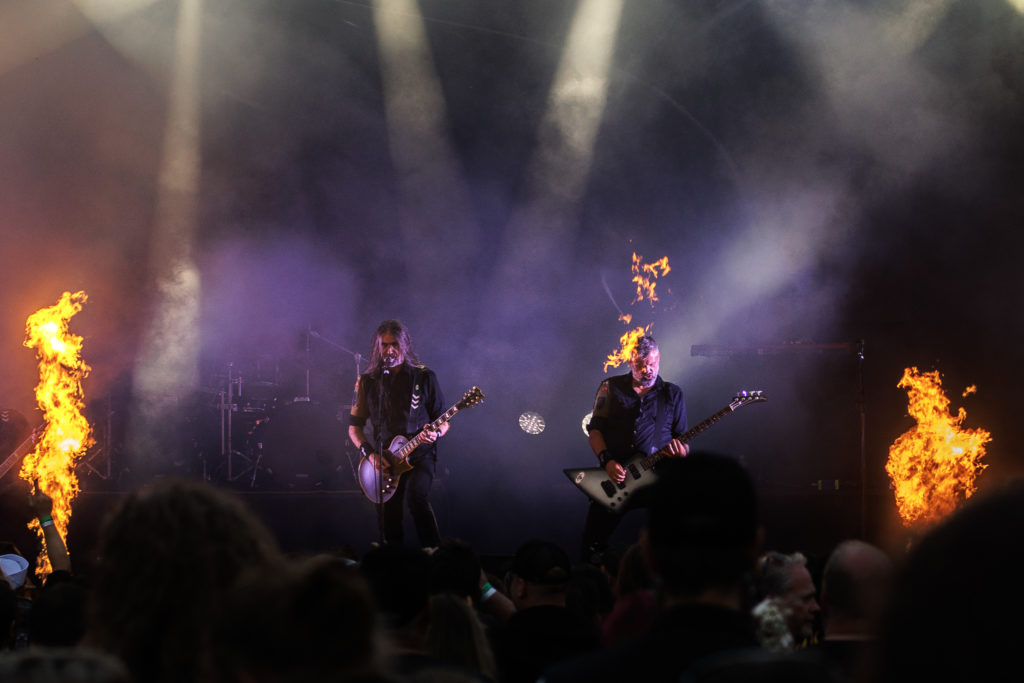
Read also: Vreid unleash the darkness at Midgardsblot
Vreid will be more active than ever
The plan does not end with the album release and the festivals of 2026. Kvåle says that the long and demanding creative process has also strengthened the band’s determination to commit fully to the years ahead. – “When we decided to make a new album and put so much of ourselves into it, we also decided that we would get out and play as much as possible over the next two or three years.”
The ambition is to undertake extensive touring throughout both 2026 and 2027, internationally and in Norway. – “Over the next few years, Vreid will probably be a more active band than we have ever been.”
It is a powerful contrast to the moment when Kvåle had to stop and ask what the band was actually doing. From that uncertainty grew an album. From the album came new artistic connections, a major feature film, a Jackass star in a Norwegian church, a collaboration with one of Norway’s most distinctive rock vocalists – and concerts on some of the largest and most spectacular metal stages in the world.
Vreid did not find the way forward by following routine. They found it by refusing to release anything until the energy, curiosity and fighting spirit had returned. And when the darkness finally descended upon Vreid again, it was not a full stop.
It was the beginning of a new chapter.
Experience the complete album that emerged after Vreid stopped, rediscovered their energy and opened the door to a new chapter:
Follow Rockman’s playlist featuring some of the finest music of the 2026 rock year. Several tracks from Vreid’s “The Skies Turn Black” also appear on Rockman’s continually expanding Spotify playlist of some of the finest rock and metal songs released throughout 2026.
Follow the playlist and discover established names, new Norwegian bands and hidden gems:
👉 New Norwegian rock songs of 2026
Exclusive: How Jørn Lande became the voice of Black Sabbath legend Tony Iommi’s new solo album
Explore Rockman’s extensive guide to active Norwegian rock bands
Klikk her for å lese den norske versjonen.
Join the conversation
What do you think of “The Skies Turn Black”?
Have you seen Vreid live during this year’s European tour, at Wacken, Sweden Rock or Midgardsblot – and which song from the new album has made the strongest impression on you?
Share your thoughts, photographs and video clips on Rockman’s Facebook page